Dating as a Gender Diverse Person. On Courage, Disclosure, and Finding Real Connection.
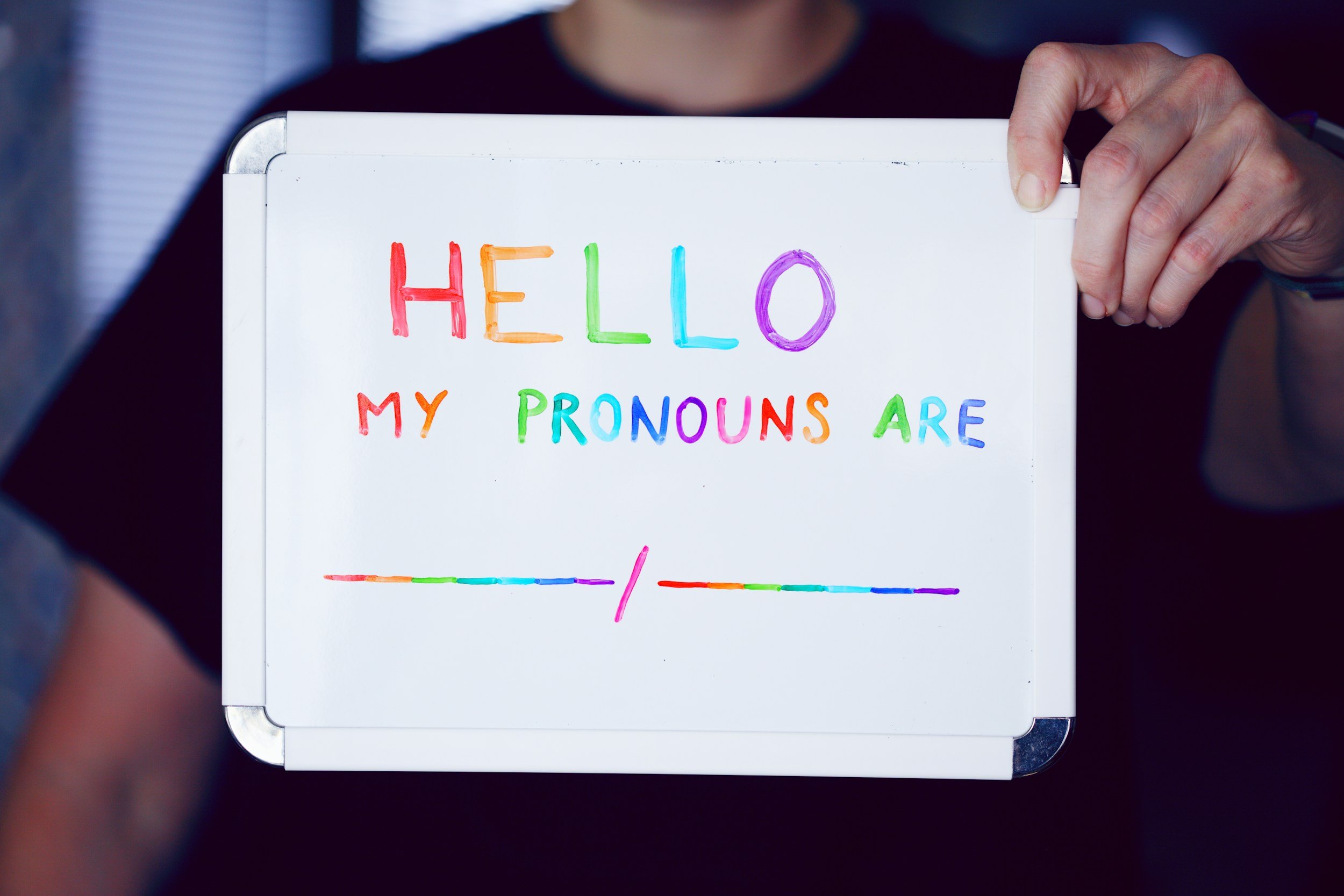
There is a lot of conversation in mainstream culture right now about transgender and non-binary identity. Some of it is useful. A lot of it is not. And almost none of it touches what it actually feels like to navigate dating when your gender is something the world is still learning to understand, when your body may or may not match how you see yourself, when every new relationship brings a fresh set of decisions about how much to share and how soon.
This post is for trans and non-binary people who are dating or thinking about dating and want to feel a little less alone in how complicated it can be. It is also for anyone who is in a relationship with a gender diverse person and wants to understand their experience more honestly.
Every trans and non-binary experience is different. I am not trying to speak for all of them. But I do want to name some things I see and hear in my work that deserve more room than they usually get.
The Disclosure Question
One of the most exhausting parts of dating as a trans person is the question of disclosure. When do you tell someone? How early is too early, how late feels like a breach of trust? What happens if they react badly? What happens if they react well but in a way that makes you feel like a curiosity rather than a person?
There is no universally right answer, and that ambiguity is genuinely hard to sit with. Some people prefer to disclose early so they are not investing in someone who won’t be able to show up for them. Others need more time to feel safe enough to be that vulnerable. Both are completely reasonable. The problem is that either choice carries risk, and the weight of managing that risk falls entirely on the trans or non-binary person, which is its own kind of unfairness.
For non-binary people there is an added layer. Coming out as non-binary often requires explaining what that means before the conversation can even really begin, because so many people have no real framework for gender outside the binary. That labor of educating someone while also being vulnerable with them is a particular kind of exhausting that binary trans people may not face in quite the same way.
Disclosure is also not a single conversation. It comes up again when a relationship deepens, when physical intimacy becomes part of the picture, when you meet each other’s families, when someone who doesn’t know asks a question in front of your partner. Each of those moments is its own small act of courage, and they add up. If dating sometimes feels like it requires more bravery than it should, that’s because it does. And that is worth acknowledging rather than just pushing through.
Intimacy When Your Relationship with Your Body is Still Evolving
For many gender diverse people, the relationship with their own body is one of the most personal and ongoing parts of their experience. There is no single trans or non-binary body. Some people are pre-everything, some are mid-transition, some have been on hormones for years, some have had surgeries and some have not and some never will. Some non-binary people don’t experience dysphoria in a traditional sense but still have very specific feelings about how their body is seen and touched and talked about. All of it is valid, and none of it is simple to bring into intimacy with another person.
Bringing that body into closeness with someone new takes an enormous amount of trust. There is the practical reality of navigating what feels affirming and what doesn’t, what language to use, what touch is welcome and what isn’t, how to communicate those things without it feeling like a clinical briefing before every intimate moment. And underneath all of that is something more tender: the fear of being seen fully and found lacking. Of a partner’s response, even an unintentionally clumsy one, landing in exactly the place that is already most tender.
This is why emotional safety is not optional. It is the foundation that makes physical intimacy possible at all. Partners who understand that, who stay curious and communicative without making their trans or non-binary partner feel like a burden for having needs around this, are genuinely worth finding and worth waiting for.
Intimacy is not just about the physical. It is about being known fully by another person and having them stay. For transgender and non-binary people, letting someone try takes a particular kind of courage.
On Fetishization
Trans and non-binary people encounter fetishization in dating, but it does not look the same for everyone and it is worth naming some of those differences.
Trans women, particularly trans women of color, face a pattern of hypersexualization that is well documented and genuinely dangerous. It shows up as being sought out specifically and secretly, as being someone’s fantasy rather than their partner, as attraction that evaporates the moment a relationship becomes public or serious. It is not flattering. It is dehumanizing, and it carries real safety implications that other trans experiences do not always share to the same degree.
Trans men more often encounter a version where a potential partner is drawn to the idea of them rather than to them as a person. Excessive curiosity about the body, about transition, about what things were like before. An interest that feels more like fascination than attraction. It can feel validating briefly and hollow quickly.
Non-binary people often face a kind of exotic curiosity that is its own particular thing. Being treated as an interesting concept. A partner who is more invested in the novelty of dating someone non-binary than in actually understanding who that person is. Questions that center the gender rather than the human being who holds it.
What all of these have in common is that the person becomes secondary to the idea of them. Learning to recognize that pattern early, before significant emotional investment has happened, is a skill that develops over time. It should not have to be necessary. But for most gender diverse people who date, it is. Genuine connection tends to feel different. Someone who is curious about you as a whole person, who makes you feel like your gender identity is one part of who you are rather than the most interesting thing about you. That exists. It is worth holding out for.
When the People Who Knew You Before Change Shape
For transgender and non-binary people who have come into their identity within the context of existing relationships, whether with a romantic partner, close friends, or family, there is a particular complexity that doesn’t get discussed nearly enough. The people who loved you before are navigating their own process, and sometimes that process is slower or messier than you need it to be.
A partner who is genuinely trying but still occasionally uses the wrong name or pronoun. A best friend who keeps referencing who you used to be, not out of malice but out of habit and history. A family member who loves you and is working through their own grief about the person they thought they knew, even as you are finally becoming more yourself. All of these are real, and all of them can be painful even when the intention behind them is good.
For partners specifically, accompanying someone through a gender transition is its own significant experience. Their own identity, the way they understand their sexuality, the relationship they thought they were in, all of it may be shifting alongside yours. That does not mean their process is more important than yours. But it is real, and relationships that survive transition usually do so because both people are given space to navigate it honestly rather than one person’s needs being invisible.
There is grief in this too, even when transition is exactly the right thing. Grief for friendships that couldn’t hold it. For family dynamics that changed. For the version of yourself that existed in other people’s memories, the one you may feel complicated about or tender toward or relieved to have left behind. That grief belongs somewhere. It does not have to be carried alone.
And then there is the question of community. For some trans and non-binary people, coming into their identity means finding a new community that sees them fully, often for the first time. For others it means navigating existing communities, religious, cultural, professional, that may not yet have the language or the openness to meet them where they are. Both experiences shape how dating feels and what feels possible. Neither one is simple.
The relationships that survive transition, or begin after it, tend to be built on a more honest foundation than almost anything else. Because they know who you actually are.
Navigating Visibility and Identity in Dating
Dating while gender diverse often involves a constant low-level negotiation about visibility. How out are you in different contexts? Does your presentation change depending on where you are or who you are with? Are you dating within the queer community, outside of it, or somewhere in between? All of those things shape the experience of dating in ways that are specific and real.
For some trans people, dating within the queer community feels safer because there is more baseline understanding and less need to explain. But queer spaces are not automatically affirming of all trans and non-binary experiences, and sometimes the assumptions made there carry their own complications. For people dating outside the queer community, there may be more explaining to do but also, sometimes, a kind of openness from a partner who is genuinely learning and genuinely trying.
Non-binary people in particular often find that dating surfaces questions about identity that are still evolving. A new relationship can bring up things about how you want to be seen and referred to that you may not have had to articulate before. That can feel destabilizing, but it can also be clarifying. Relationships have a way of showing us things about ourselves that solitude doesn’t.
What Actually Helps
Getting clear on what you actually need from a partner before you are in the middle of trying to get it from someone is one of the most useful things you can do. Not a checklist, but a genuine sense of what emotional safety looks like for you specifically, what you need around your body and language and disclosure and visibility. That clarity doesn’t guarantee you will find it, but it makes it much easier to recognize when you do, and to leave when you don’t.
Community matters more than people often realize. Other trans and non-binary people who are dating or have dated, who understand the specific texture of this experience without needing it explained, can offer something that even the most well-meaning cisgender friend or therapist cannot fully replicate. If you don’t have that in your life right now, it is worth looking for.
And therapy, with someone who actually understands transgender and non-binary experience and doesn’t require you to spend your sessions on the basics, can be a place to work through the parts of dating that feel too complicated or too tender to bring anywhere else. The disclosure anxiety. The body image piece. The grief of relationships that shifted. The hope that keeps you trying anyway. All of it belongs somewhere, and it deserves a space where you don’t have to edit yourself to be understood.
If you are a trans or non-binary person navigating dating and relationships and want a space where you can bring the full complexity of that experience, I would love to work with you. Reach out and let’s talk.